


How to Clean Stains off Marble Countertops

How to Clean Stains From Marble Countertops
To clean stains from marble countertops requires understanding the specific characteristics of each stain. Marble, a porous and sensitive stone, reacts differently to substances depending on the alkalinity, leading to various stains. Consulting a stone restoration professional is recommended, but knowing about stain types and removal methods is beneficial.
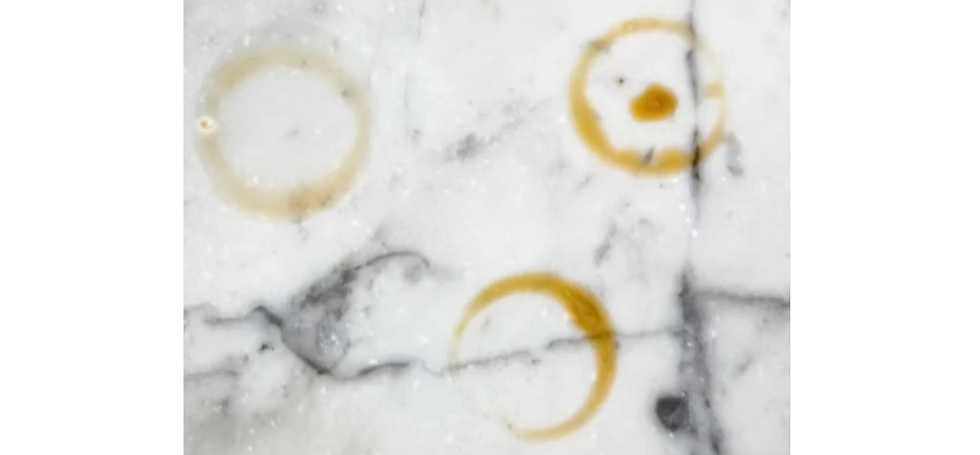
How to Get Oil Stains Out of Marble Countertops
To clean an oil-based stains from marble countertops is a common concern, especially in kitchens. These stains, which can come from cooking oils, cosmetics, or grease, often leave dark patches on the surface. To get rid of oil stains on marble, follow these steps:
Create a thick cleaning paste made of baking soda and water.
Apply the paste to the standard area and cover with plastic wrap.
Leave it for 24 to 48 hours, then rinse and dry thoroughly.
For stubborn stains, you may need to repeat the process with added dish soap or use a poultice, such as Bellinzoni Mangiamacchia, specifically designed for oil stains on marble.
You may need to repeat the process several times to completely remove the stain from the stone.

How to Get Water Stains Out of Marble Countertops
Water can be a culprit in marring your marble’s surface. Here’s how you can get them out:
A gentle buffing with a soft cloth may suffice for light water stains.
Create a paste using a few drops of ammonia and 00-grade steel wool for more persistent marks.
Gently rub the paste onto the stain, being careful not to scratch the surface.
Rinse thoroughly and dry with a soft cloth.
How to Remove Organic Stains From Marble Counters
Coffee, tea, wine, and fruit juices can leave stubborn marks on marble countertops. To get rid of organic stains, follow these steps:
Mix hydrogen peroxide with a few drops of ammonia.
Apply the solution to the stain and cover with plastic wrap.
Allow it to sit for 24 hours before rinsing and drying.

How to Get Rid of Rust Stains on Marble Counters
Rust stains can be challenging to remove. Here’s how you can remove rust stains from marble countertops:
Use a poultice made specifically for rust stain removal on marble.
Apply according to the manufacturer’s instructions.
For severe cases, consult a professional to avoid damaging the marble and help locating the cause of the rust stain (leaking fixtures, improper supports, etc.)
Remember to test your chosen method on a small, inconspicuous area first. This precaution ensures the cleaning solution won’t damage or discolor your marble.
How to Prevent Stains on Marble
It's better to prevent stains rather than fix them, especially to preserve the appearance of your marble countertops. To ensure your marble surfaces remain free of stains, we recommend:
Educate household members and guests: To reduce the risk of accidental staining, ensure everyone in your household understands the dos and don’ts of marble care.
Use coasters and trivets: Always use coasters under glasses, especially for acidic or colored beverages. Place hot items on trivets to prevent heat damage and potential spills.
Protective mats: Use mats in areas prone to spills, such as under coffee makers or near sinks. Ensure these mats are non-rubber-backed to avoid trapping moisture.
Regular cleaning: Clean your marble counters daily with a pH-neutral cleaner specifically designed for natural stone using a microfiber cloth. Avoid acidic or abrasive cleaners that can etch or scratch the surface.
Urgent spill response: Promptly blot spills with a soft, dry cloth to absorb them quickly. Avoid wiping, as it may spread and cause a larger stain.
Regular maintenance: Schedule professional deep cleaning and resealing annually, or as experts recommend, to maintain the marble’s natural beauty and enhance its stain resistance.
Sealing: Have your marble countertops professionally sealed to create a protective barrier against stains. Consult professionals to determine the best sealing products and frequency for your marble type.
How to Guarantee Stains Won't Occur on Marble
While sealing is a lightweight solution that "buys you time" as you race to clean up any spills, it does not guarantee that stains and etch marks won't occur. Not only do you have to remember to seal your countertops several times a year, but improper or overuse can also lead to a cloudy or streaky finish.

Installing Marble Armor on your countertops provides a permanent and durable solution to prevent stains, etch marks, and chipping on your marble. Marble Armor provides a protective barrier by applying a thin film to the countertop that prevents liquids from penetrating the stone while maintaining the aesthetic look. Available in either a satin or gloss finish, Marble Armor is the only stone protection that can wrap countertop edges and waterfalls in one solid piece. Our Certified Installers are located across the country and trained to provide the best service and products on the market. To find an installer or request a quote, contact one of our locations or fill out the contact form.


Comments